
“The best remedy for those who are afraid, lonely or unhappy is to go outside… and then one feels that all is as it should be.”
— Anne Frank
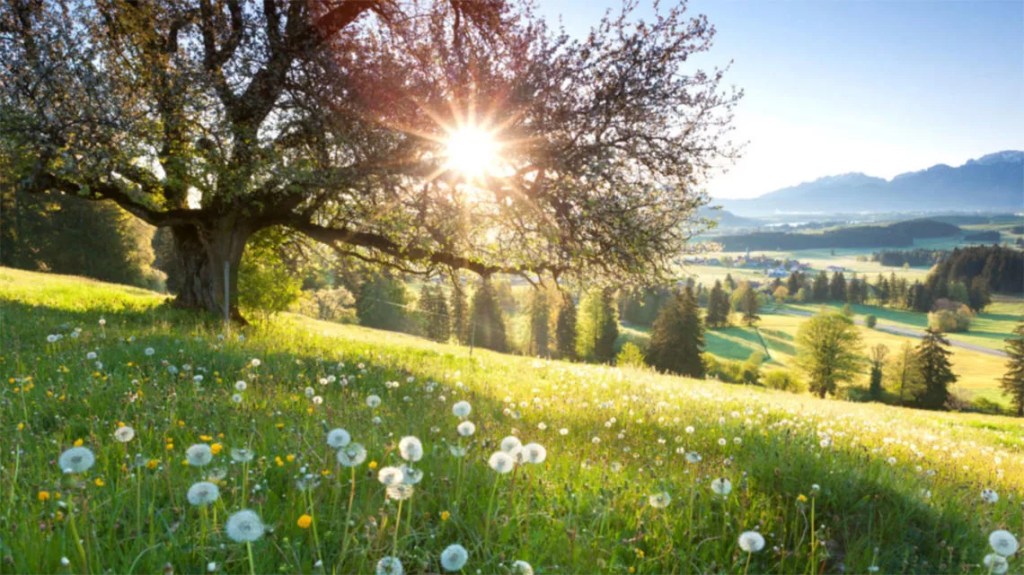
Nature has consistently demonstrated generosity—not only through abundance, but through balance. Its beauty is matched by the quiet permission it offers us: to pause, to breathe, and to experience solitude without loneliness. Anyone who has ever stood beneath an open sky after a long, difficult day knows this instinctively. There is a particular kind of relief that arrives when words fall short and the world remains vast.
For centuries, nature has been described as God’s greatest artwork. Despite this reverence, humans have become the most disruptive force within natural systems. Like all living beings, we depend on nature for survival, yet uniquely possess the capacity to reshape it for our own convenience.
And that power has come at a cost.
Human nature is fundamentally self-centered. Rivers are rerouted, mountains hollowed, forests cleared, and cities expanded into unsuitable spaces. As human presence intensifies, its impact becomes evident—sometimes subtle, but often irreversible. Forests are replaced by concrete, rivers confined to channels, mountains reduced to commodities. What once demanded patience now demands speed.
A villager displaced by a dam once remarked, “The river no longer knows its way, and neither do we.” In that sentence lies both ecological and human loss.
Misguided construction, reckless mining, irresponsible irrigation, and unchecked greed disrupt ecosystems that have developed over centuries. Negligence results in pollution, while ambition leads to exploitation. Gradually and quietly, ecological balance is lost—often long before the damage becomes visible.
Occasionally, nature responds.
Kedarnath stands as one such reminder.
Nearly a century and a half ago, Kedarnath rested quietly in the Garhwal Himalayas—humble, austere, and in harmony with its surroundings. Temples, in their original intent, were not centres of commerce but spaces of stillness. They were placed at great heights and in remote landscapes not merely for mythology, but because nature itself offered refuge there. The mountains, the rivers, the silence—they softened the human mind.
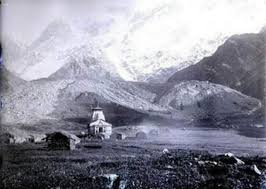
Pilgrims once walked for days, carrying little more than belief and endurance. The journey itself was part of the prayer.
Over time, that silence was replaced.
What began as reverence became opportunity. Pilgrimage routes expanded into commercial corridors. Fragile terrain was subjected to construction unsuited to its natural rhythms. Rivers were constrained, mountains altered, forests diminished—all for access, convenience, and growth. Nature was no longer heeded; it was managed.
And then it responded.
The floods in Kedarnath were not merely a natural disaster; they represented a correction. They served as a reminder that the Himalayas function on timescales far exceeding human ambition. Within hours, centuries of human intervention were reversed, leaving devastation—and a sobering clarity. Survivors later spoke of an unsettling quiet that followed, as if the mountains themselves had drawn a boundary.
But the mountains are not alone in this story.
Years earlier, in December 2004, India’s coastline experienced a similar lesson—this time from the sea. Along the eastern and southern shores, the ocean receded unnaturally, exposing the seabed like a warning few recognised. Children ran forward, curious. Fishermen sensed danger. Moments later, massive waves struck coastal villages in Tamil Nadu, Andhra Pradesh, Kerala, and the Andaman and Nicobar Islands, erasing entire communities within minutes.
For generations, the sea had provided sustenance, supported livelihoods, and shaped cultural identity. One fisherman later said, “The ocean fed us like a mother. We forgot that even a mother has moods.” Familiarity had bred complacency. Mangroves were cleared, natural buffers weakened, coastlines altered for tourism and development. Resilience slowly eroded.
The tsunami, like the events in Kedarnath, was not punishment—but recalibration.
And then, years later, the reminder came again—this time without roaring water or collapsing mountains.
It came quietly.
A virus crossed borders with ease, ignoring wealth, power, geography, and technology. Cities that never slept fell silent. Skies cleared as aircraft vanished. Streets emptied. Economies stalled. Millions were lost, and billions were forced into stillness.
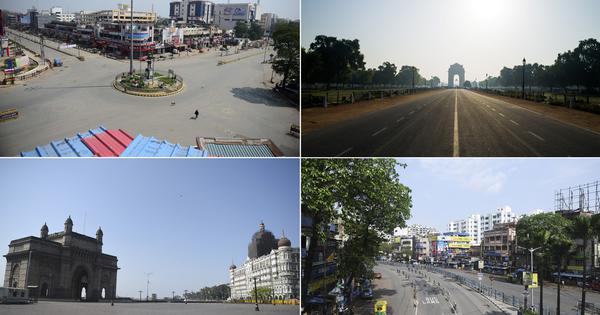
For the first time in decades, people heard birds where traffic once roared. A doctor in Italy wrote, “We believed ourselves unstoppable. All it took was breath to humble us.”
COVID-19 was not confined to a single region or landscape. It was global. Intimate. Unavoidable.
These events remind us that, despite scientific advancement and global connectivity, human life remains deeply interconnected with the natural world. Economic, social, and political systems are far more fragile than often assumed. When ecological balance is disrupted, consequences ripple outward beyond our control.
Like the mountains and the sea, the pandemic stripped away illusion. It exposed inequality. It revealed how closely our lives are linked. It forced reflection on pace, consumption, and the cost of perpetual expansion.
As Rachel Carson once warned, “The more clearly we can focus our attention on the wonders and realities of the universe about us, the less taste we shall have for destruction.”
Nature, once again, did not retaliate. It recalibrated.
Mountains reclaim valleys.
Rivers reclaim floodplains.
Oceans reclaim shores.
And life, when pushed too far, reasserts itself.
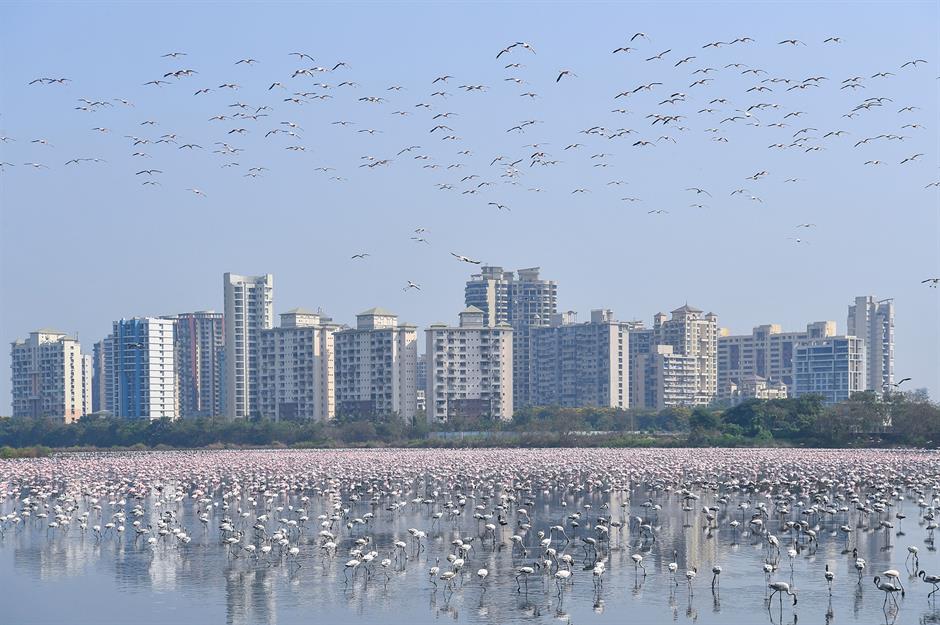
Each time, we rebuild. But too often, we forget.
These events—Kedarnath, the tsunami, the pandemic—are not isolated chapters. They are part of the same story. A story about overreach. About disconnection. About what happens when human intelligence outpaces humility.
Modern life has distanced many of us from this truth. For the urban dweller, nature is reduced to curated experiences—a television channel, a manicured park, a solitary tree interrupting a sidewalk. Rain becomes an inconvenience. Silence feels unfamiliar.
But to a farmer, rain is survival.
To ecosystems, balance is life.
Nature is not merely a backdrop; it is an interconnected system that sustains humanity quietly and consistently. Failure to recognise this interconnectedness carries consequences—not just environmental, but existential.
Nature is not merely recreation.
Not just scenery.
Not a resource to exhaust.
It is a shared home.
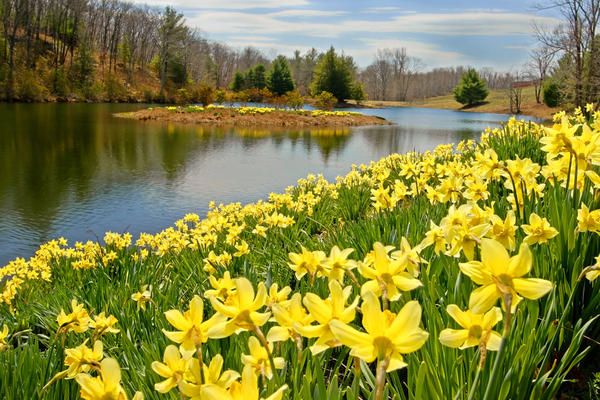
A grassy field to rest on.
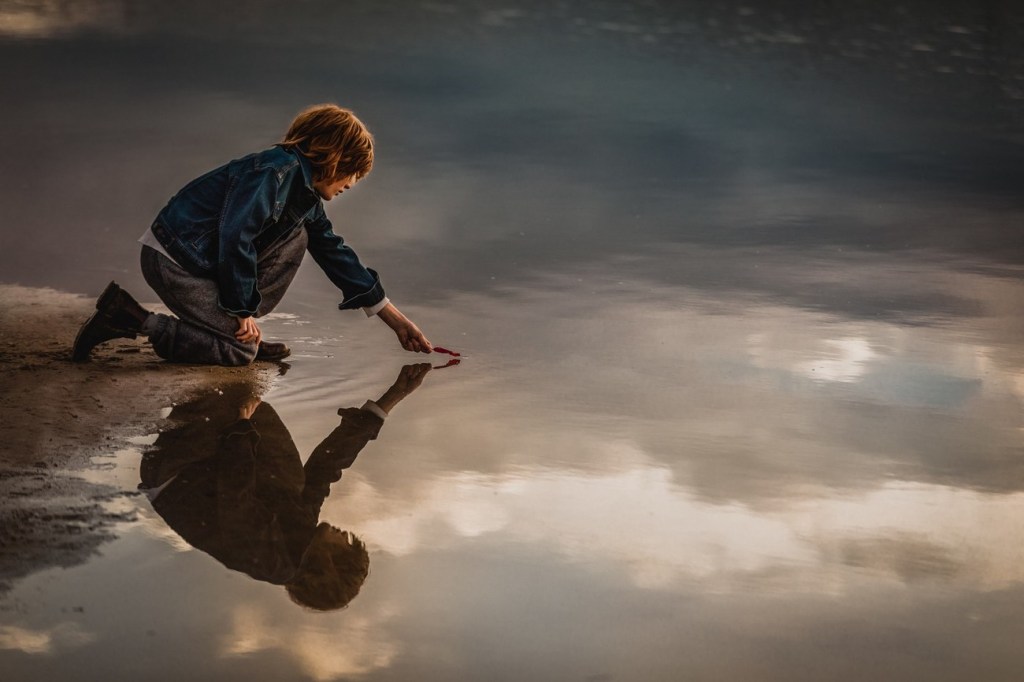
A lake that reflects more than our image.
An ocean that humbles.
Mountains that remind us of scale.
To destroy it in the name of progress is not advancement.
It is amnesia.
Anne Frank described stepping outside to find that, despite adversity, “all is as it should be.” William Wordsworth, wandering among daffodils, discovered that nature’s greatest gift was not the moment itself, but the memory that returned to him in solitude—steadying his inner life.
Between these truths lies both our forgetting and our hope.
Nature offers us perspective, comfort, and correction—not to diminish us, but to remind us of belonging. If humanity can learn to approach nature not as something to conquer or consume, but as something to listen to and live alongside, perhaps solace will no longer need to arrive through loss. Perhaps stillness will not require catastrophe.
And perhaps, in remembering how to walk gently upon the earth, we may yet rediscover balance, humility, and ourselves.




 FootNotesToLife
Leave a Reply to Veerites Cancel reply